


Full Day Cambodia Adventure Banteay Srei Phnom Kulen Koh Ker and Beng Mealea Travel Guide

A single day can take you from pink sandstone carvings to mountain waterfalls, from a jungle-draped temple to a seven-tiered pyramid rising out of the forest. This is not a slow temple circuit. It is a long, rewarding, camera-filling route through some of northern Cambodia’s most memorable sites.
This full-day itinerary works best from Siem Reap with a private driver, an early start, and a flexible attitude. Banteay Srei, Phnom Kulen, Koh Ker, and Beng Mealea each deserve time. Together, they create a bold Cambodia Adventure that blends sacred history, nature, archaeology, and the quiet thrill of ruins that feel far from the main Angkor crowds.
A realistic route for one big day
This route is ambitious. It covers sites northeast and east of Siem Reap, with a lot of time on rural roads. The reward is variety. Instead of seeing only the central Angkor temples, you get a broader sense of the Khmer Empire’s reach, from mountain sanctuaries to remote capitals.
A practical order usually looks like this:
Time of day | Stop | Why it works |
Early morning | Banteay Srei | Best light for carvings and cooler weather |
Midmorning to midday | Phnom Kulen | Waterfalls, sacred sites, and forested scenery |
Afternoon | Koh Ker | Remote temples and the pyramid-like Prasat Thom |
Late afternoon | Beng Mealea | Atmospheric ruins with softer light |
Start before sunrise or as close to it as your driver allows. Leaving Siem Reap around dawn gives you cooler air at Banteay Srei and a better chance of staying ahead of larger groups.
This is the kind of day where a private car is worth it. Tuk-tuks are wonderful for Angkor’s closer temples, but this route covers longer distances and rougher stretches. A car also gives you a place to cool down, store water, and rest between stops.
If you are comparing Cambodia Tours, look for one that clearly includes all four sites, lists which entrance tickets are covered, and allows enough time at each stop. Some tours rush remote temples to fit the route into daylight, so ask about the pace before booking.
Begin with the fine stonework of Banteay Srei
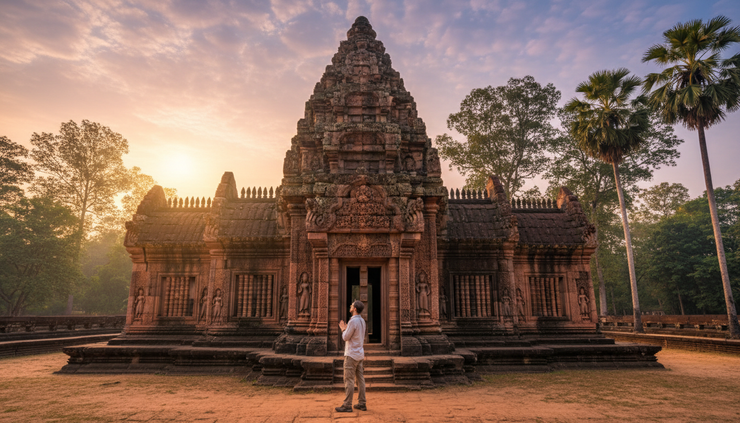
Banteay Srei is often called the “Citadel of Women,” though the name is modern. What makes it unforgettable is the detail. The temple was built in the 10th century and dedicated to Shiva. Unlike many larger Angkor temples, it feels intimate, almost jewel-like.
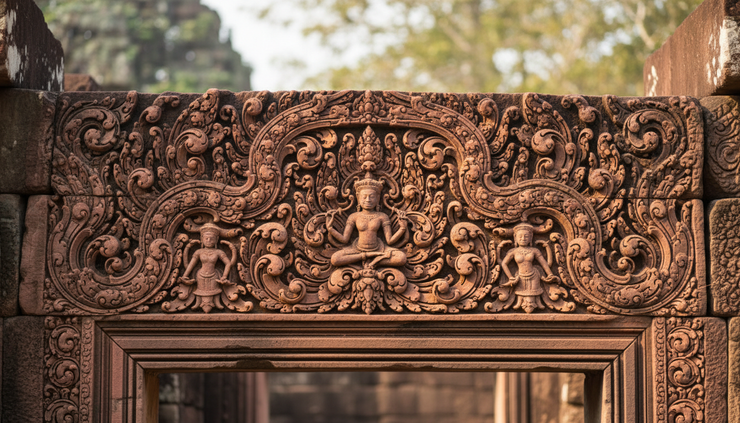
The sandstone here has a warm pink tone, and the carvings are exceptionally crisp. Door lintels, pediments, and walls show scenes from Hindu mythology, floral patterns, guardians, and delicate figures carved with remarkable precision. Even after centuries, many details remain easy to read.
Banteay Srei was not built by a king in the same way as some major Angkor temples. It is linked to high-ranking counselors and religious figures, which adds to its special place in Khmer history. Its artistry shows that power in the Angkor period was not expressed only through size. Here, refinement does the work.
Give yourself time to look closely. The temple is compact, so it is easy to rush through and miss what makes it special. Walk slowly around the galleries, then step back to see how the carvings fit together across the temple walls.
Tips for visiting Banteay Srei
Arrive early for cooler weather and better photos.
Bring a zoom lens or use your phone’s close-up setting for carvings.
Stay behind barriers, even when details tempt you closer.
Pair the visit with a short stop at nearby village stalls if time allows.
The best time to photograph Banteay Srei is early morning. The low sun warms the stone and brings out the shadows in the carvings. Midday light can flatten the details and make the site feel much hotter.
Head into the forest and waterfalls of Phnom Kulen
After Banteay Srei, the day shifts from stonework to sacred mountain scenery. Phnom Kulen is one of Cambodia’s most important cultural landscapes. The mountain is closely tied to the origins of the Khmer Empire, and Cambodians often visit for pilgrimage, picnics, and blessings.
The drive climbs into greener terrain. Expect forest, roadside fruit stalls, and a slower rhythm than the temple plains. Phnom Kulen is best known to many travelers for its waterfalls, but its cultural importance runs deeper.
One major highlight is the riverbed carvings often called the River of a Thousand Lingas. These carvings symbolize fertility and spiritual blessing, with water flowing over sacred stone before continuing downstream. You may also visit the large reclining Buddha at Preah Ang Thom, a significant pilgrimage site reached by stairs.
Then come the waterfalls. Depending on the season, the water can fall in strong sheets or softer streams. During the rainy season and the months after it, the falls are more powerful. In the dry season, the area is still beautiful, but the flow may be lighter.
Bring swimwear if you want to cool off, but dress respectfully when visiting sacred areas. A simple plan works well: temple or river carvings first, waterfall break after.
What to know before visiting Phnom Kulen
Phnom Kulen usually requires a separate ticket from the Angkor sites.
The mountain road may have traffic rules or one-way timing on busy days.
Wear shoes with grip, especially near wet rocks.
Carry small cash for snacks, drinks, or local parking areas.
Keep shoulders and knees covered near active religious sites.
Phnom Kulen makes the day feel less like a checklist of ruins and more like a journey through living culture. Local families come here to pray, eat together, and spend time in nature. That blend of sacred space and weekend escape is part of its charm.
Explore the remote temples of Koh Ker and the wild mood of Beng Mealea
The afternoon brings the most remote stretch of the journey. Koh Ker and Beng Mealea are different in mood, but they pair beautifully. One feels like a lost royal capital. The other feels like a temple being slowly reclaimed by the forest.
Koh Ker shows a different face of the Khmer Empire
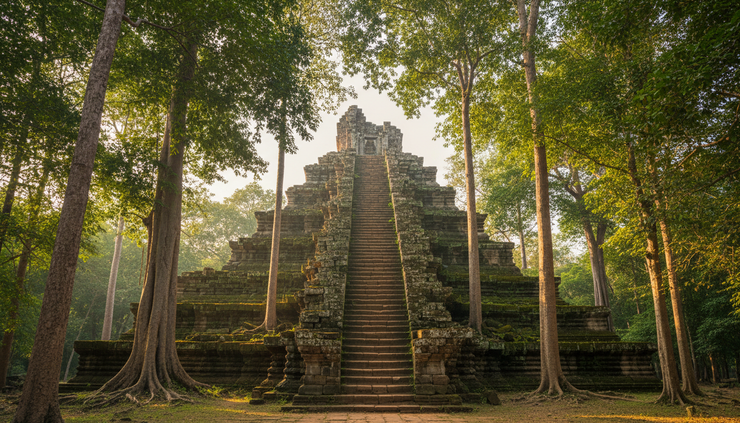
Koh Ker served as a Khmer capital in the 10th century under King Jayavarman IV. It sits far from the main Angkor complex, which gives it a more secluded atmosphere. The site includes many temples, shrines, and reservoirs spread through the forest.
The standout is Prasat Thom, often described as a stepped pyramid. Its shape feels strikingly different from the better-known towers of Angkor Wat or Bayon. The temple rises in tiers, giving the site a bold vertical presence. Even if access to the top changes for safety or conservation, the base alone is impressive.
Koh Ker’s architecture uses brick, sandstone, and laterite. Many temples sit in quiet clearings, where trees and roots press close to old walls. Compared with central Angkor, Koh Ker often feels less crowded, which makes it easier to imagine the scale of the ancient city.
Do not try to see every small temple if you are on a one-day four-stop route. Focus on the main complex and one or two nearby sites. A rushed visit to too many ruins can blur together, while a slower look at fewer spots leaves a stronger memory.
Beng Mealea is made for slow exploration
Beng Mealea is one of Cambodia’s most atmospheric temples. Built in the Angkor period and often linked stylistically to Angkor Wat, it feels much wilder than the grand temples near Siem Reap. Fallen stones, mossy corridors, leaning galleries, and roots create a sense of discovery.
This is not the place to hurry. Beng Mealea rewards curiosity. Wooden walkways guide visitors through parts of the site, while other views open onto collapsed chambers and tree-covered walls. The ruin feels cinematic, but it is also fragile. Stay on safe paths and avoid climbing loose stone, even when others do.
Late afternoon can be beautiful here. The light softens, the heat drops, and shadows stretch across the broken galleries. If there has been recent rain, the greens look richer, but the stones may be slippery.
Exploration tips for Beng Mealea
Wear sturdy shoes, not flip-flops.
Watch your step on walkways and uneven stones.
Bring insect repellent, especially in the wet season.
Keep a flashlight or phone light handy for darker corners.
Do not climb unstable blocks for photos.
Beng Mealea is a strong final temple because it slows the day down. After the bold geometry of Koh Ker, its overgrown corridors feel mysterious and moving. It reminds you that temples are not frozen objects. They age, shift, collapse, and live within the forest around them.
Travel tips, best times, and food to try along the way
A full-day route like this is much easier when you plan the basics well. The distance, heat, ticketing, and food options all matter.
The best season for this route
The most comfortable months are usually November through February. The air is cooler, skies are often clearer, and long walks feel easier. This is also a popular season, so major sites may be busier.
March and April can be very hot. If you travel then, start early, drink constantly, and keep expectations realistic. You may need to shorten stops during the hottest part of the day.
The rainy season, often from May through October, has advantages. Phnom Kulen’s waterfalls are stronger, the countryside turns green, and temple moss and forest views look rich. Rain can also bring muddy paths and slower roads, so build in extra time.
What to pack for the day
For a long temple and nature day, pack light but smart.
Refillable water bottle
Hat and sunglasses
Sunscreen
Insect repellent
Lightweight scarf or cover-up for sacred sites
Comfortable walking shoes
Small cash in Cambodian riel or US dollars
Phone power bank
Dry bag or plastic pouch in rainy season
A guide can add a lot to this itinerary. At Banteay Srei, a guide explains the stories in the carvings. At Koh Ker, they help connect scattered ruins into a former capital. At Beng Mealea, they can point out safe routes and hidden details.
Local food worth seeking out
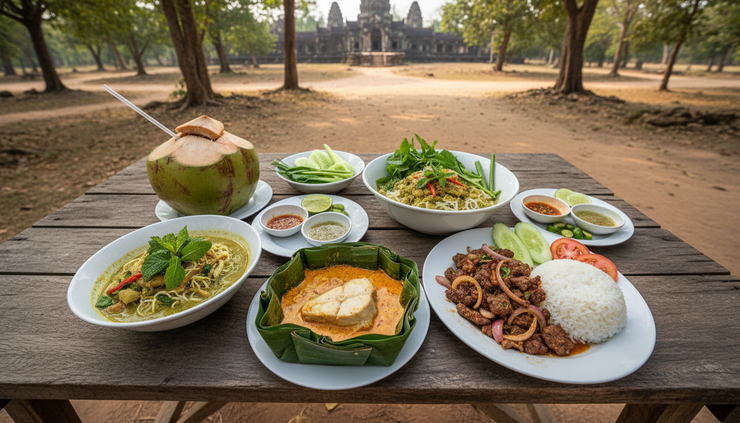
Food turns this long day from a sightseeing push into a fuller travel experience. Breakfast before departure can be simple and local. Try bai sach chrouk, grilled pork with rice, often served with pickled vegetables and broth. Another good morning dish is kuy teav, a light noodle soup.
For lunch, look for Khmer staples near Phnom Kulen or on the road, depending on your driver’s advice. Good dishes to try include:
Fish amok
A mild, fragrant curry often steamed with coconut milk and kroeung, the Cambodian spice paste.
Beef lok lak
Stir-fried beef served with rice, salad, and a pepper-lime dipping sauce.
Num banh chok
Rice noodles with a green fish-based curry gravy and fresh herbs, often eaten in the morning.
Kralan
Sticky rice cooked in bamboo with coconut milk and beans, a good road snack when available.
Fresh coconut or sugarcane juice
Ideal in hot weather, especially after walking temple grounds.
Pacing the day without burning out
The biggest mistake is treating the route like a race. Four major stops in one day leaves little room for delays. Choose priorities before leaving Siem Reap. If your main interest is carving, spend more time at Banteay Srei. If nature matters most, do not rush Phnom Kulen. If ruins excite you, protect time for Beng Mealea.
A strong pace might look like this:
Banteay Srei for close looking and photos
Phnom Kulen for sacred sites, waterfalls, and lunch
Koh Ker for the main pyramid temple and nearby ruins
Beng Mealea for a slower final walk
Be kind to your driver and guide. This is a long workday for them too. Ask about road conditions, meal stops, and realistic timing. Local knowledge makes the route smoother.
A full-day journey to Banteay Srei, Phnom Kulen, Koh Ker, and Beng Mealea is not the easiest day trip from Siem Reap, but it is one of the most varied. You move from some of the finest carving in Cambodia to a sacred mountain, then out to a remote capital and into a temple wrapped in forest.
Go early, pack well, eat local, and leave space for wonder. The best memories from this route often come between the famous stops: a coconut by the road, the sound of water at Phnom Kulen, the quiet around Koh Ker, and the first glimpse of Beng Mealea’s stones disappearing into green.


Comments